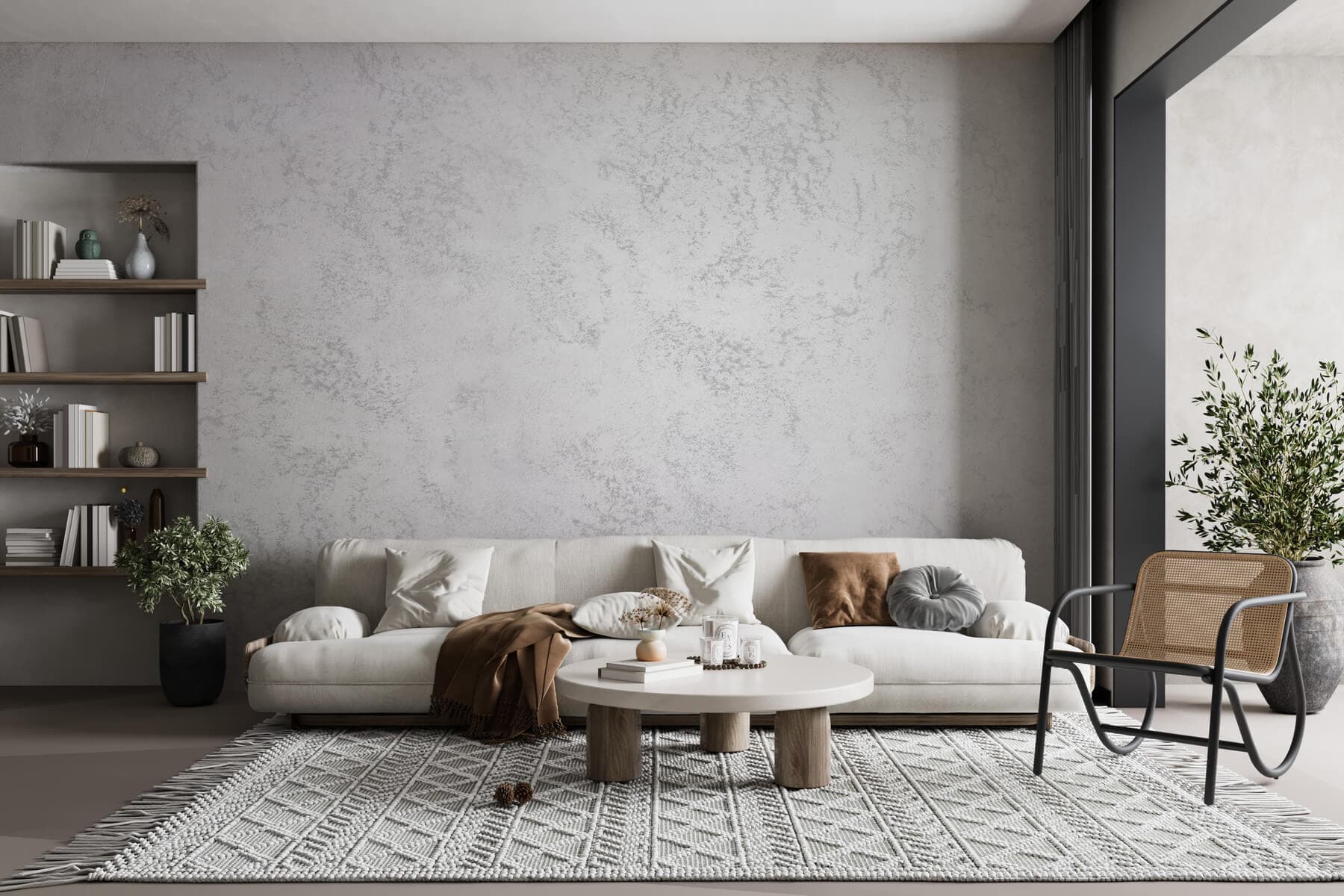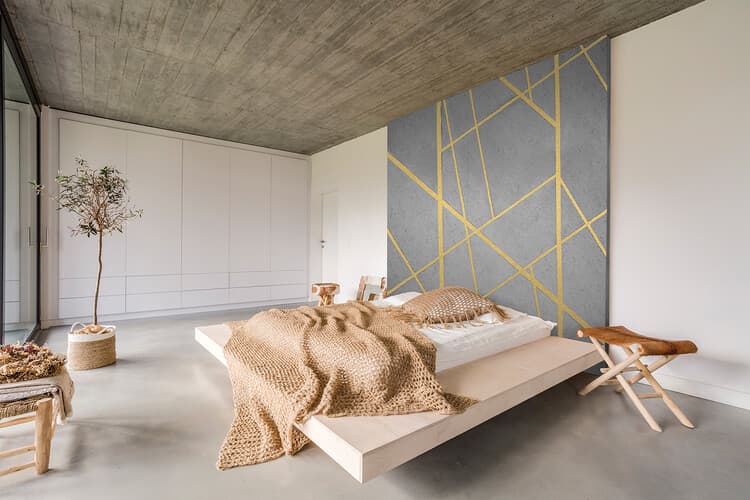
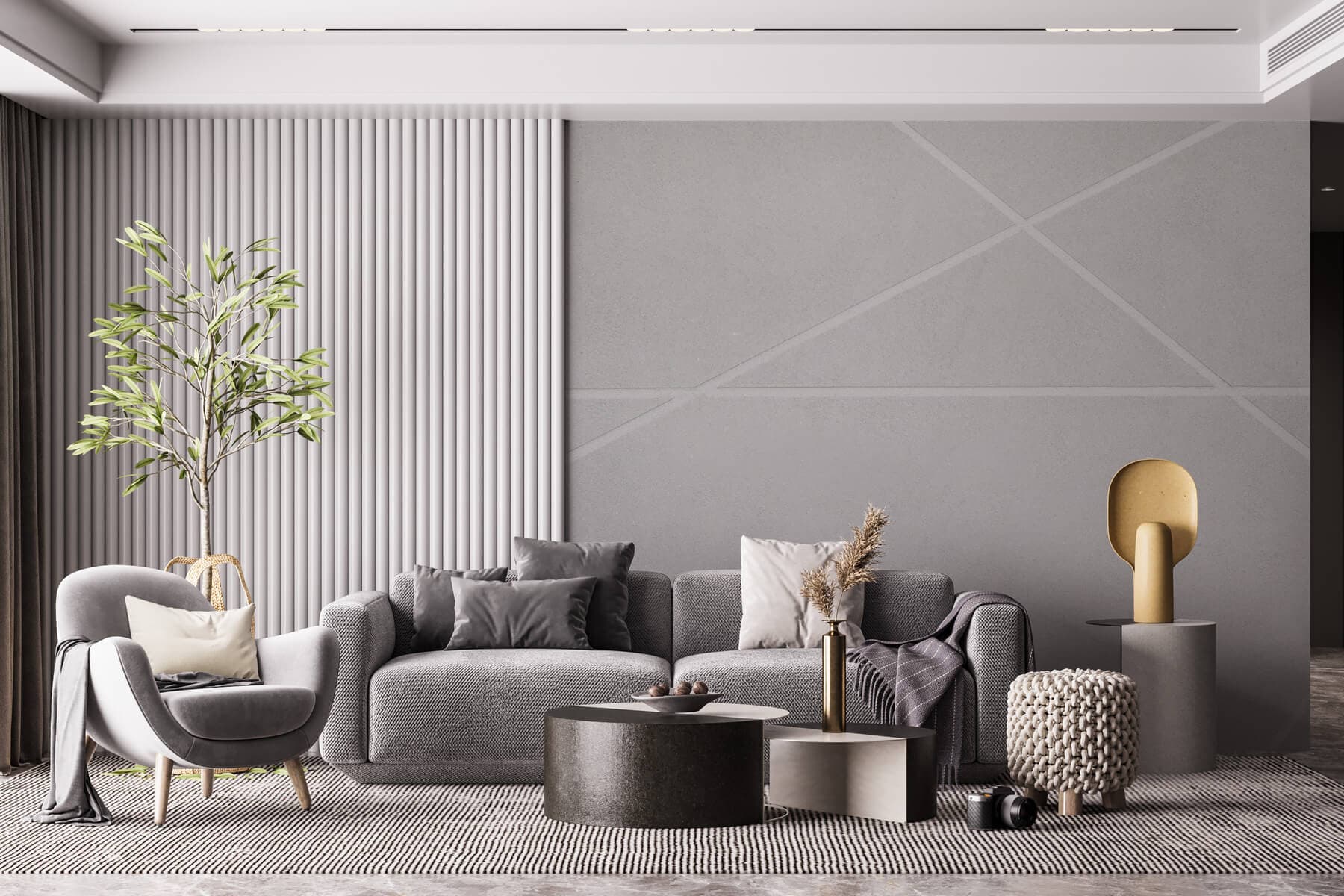
The concrete effect moved beyond a passing trend long ago. It has become a language of contemporary design — you'll find it in lofts, creative offices, cafés and, increasingly, in living rooms and bedrooms. The good news: you don't need poured concrete to achieve the look. A lime-based decorative plaster, applied correctly, faithfully reproduces the texture and depth of raw concrete at a fraction of its thickness and weight.
Why the concrete effect works so well
Exposed concrete brings three things to an interior:
- Visual calm. Large, monochrome surfaces let your furniture and objects breathe.
- Living texture. Unlike a flat paint, concrete-effect plaster catches the light differently throughout the day.
- Warm–cool contrast. Mineral grey brings out the best in wood, brass, textiles and plants.
A single accent wall is enough to completely change the character of a room. In generous spaces, two adjacent surfaces — say the TV wall and a section of ceiling — create that architectural, gallery-like feel.
Where it fits
Concrete-effect decorative plaster, such as Decorative Concrete, is a lime-based skim coat, which gives it natural vapour permeability. That makes it suitable for:
- living rooms and bedrooms — the classic accent wall;
- hallways and stairwells — it holds up well to traffic;
- kitchens — protected with a hydrophobic varnish, it withstands wiping;
- bathrooms — in areas not directly splashed, with the right impregnation.
For a more dramatic effect, the Black Concrete variant turns the wall into a deep graphite backdrop, while Magnetic Concrete adds a surprising function: the wall holds magnets — ideal in offices or children's rooms.
How it's applied, step by step
- Surface preparation. The wall must be clean, dry and stable. A coat of bonding primer is applied to ensure the decorative compound adheres.
- The first coat. A thin, even layer is spread with a stainless-steel trowel and left to dry.
- The effect coat. The second coat is worked with broad, irregular movements — this is where the clouding and formwork marks characteristic of concrete are born. The pores and small imperfections are not flaws; they are exactly what we're after.
- Protection. Once fully dry, the surface is sealed with a wax-based impregnator or hydrophobic varnish, depending on the room.
An experienced craftsman can cover a medium-sized wall in a single working day, including the drying time between coats.
Maintenance
The sealed surface is wiped with a soft, slightly damp cloth. Avoid abrasive sponges and aggressive solvents. If you want to refresh the wall years down the line, a new thin coat of decorative wax restores its original depth — without redoing the plaster.
Conclusion
The decorative concrete effect is one of the safest long-term aesthetic investments: understated, timeless and easy to fit into almost any style. If you'd like to see how it would look in your space, send us a few details about your project — we'll recommend the complete product system and put you in touch with applicators who work with our materials.